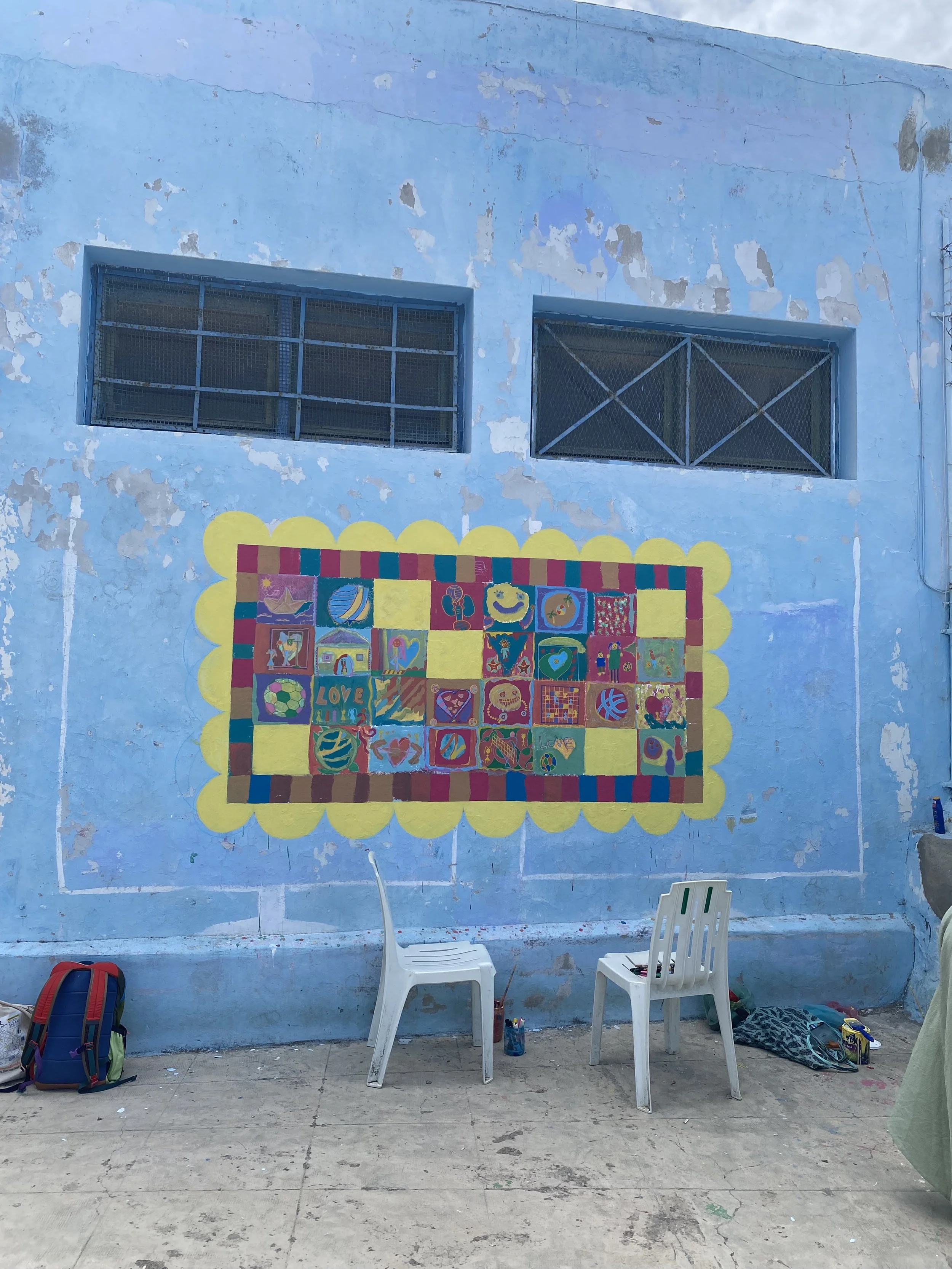
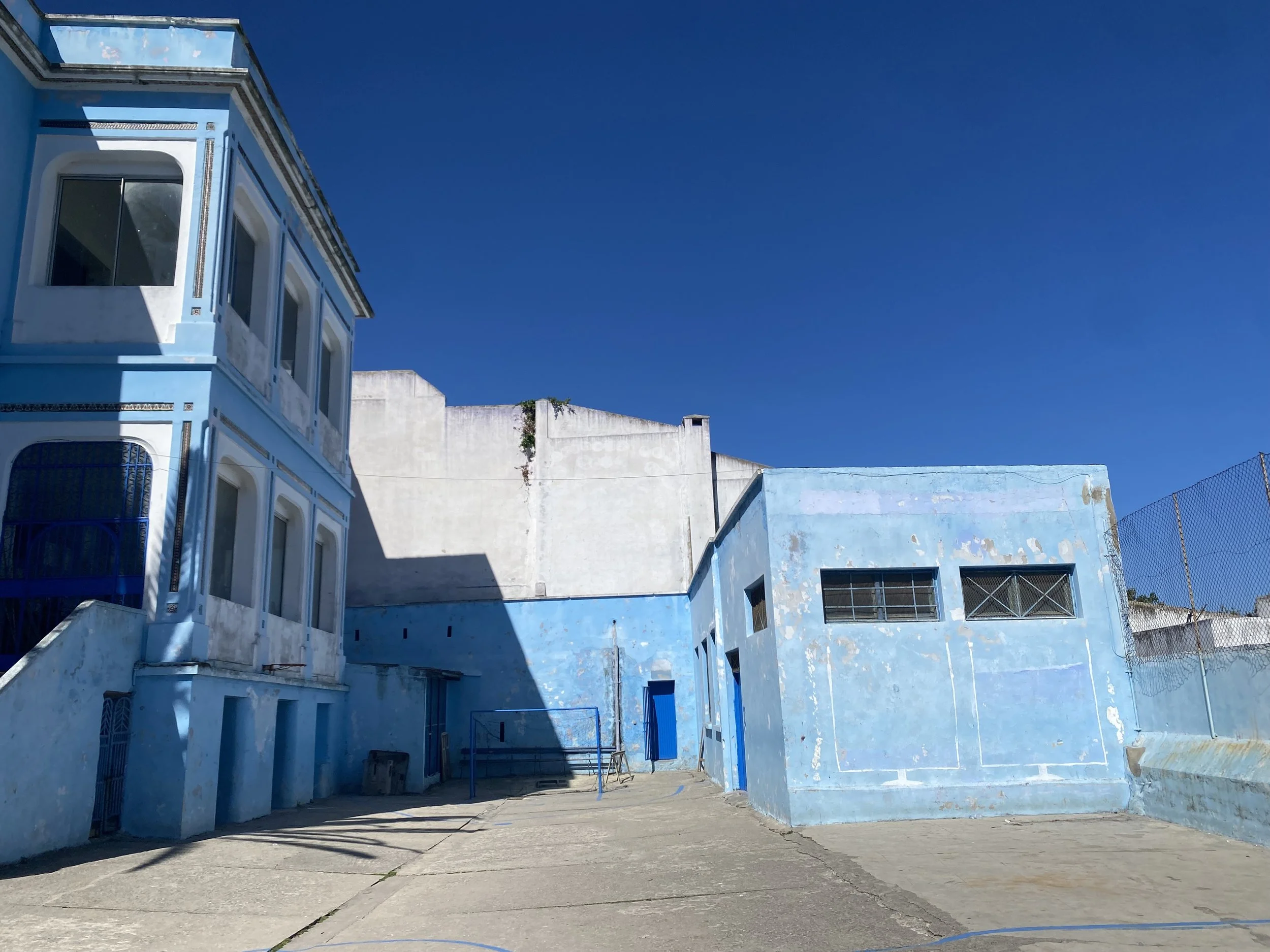
our mural at the
children’s house
reflecting on the past year, i developed an artist-educator alphabet illustrating the pillars of my practice. the following case study applies these concepts to a mural project created with fellow artist-educators Thurgga and Vasileia at The Darna Children’s House in Tangier.
CASE STUDY: THE MURAL
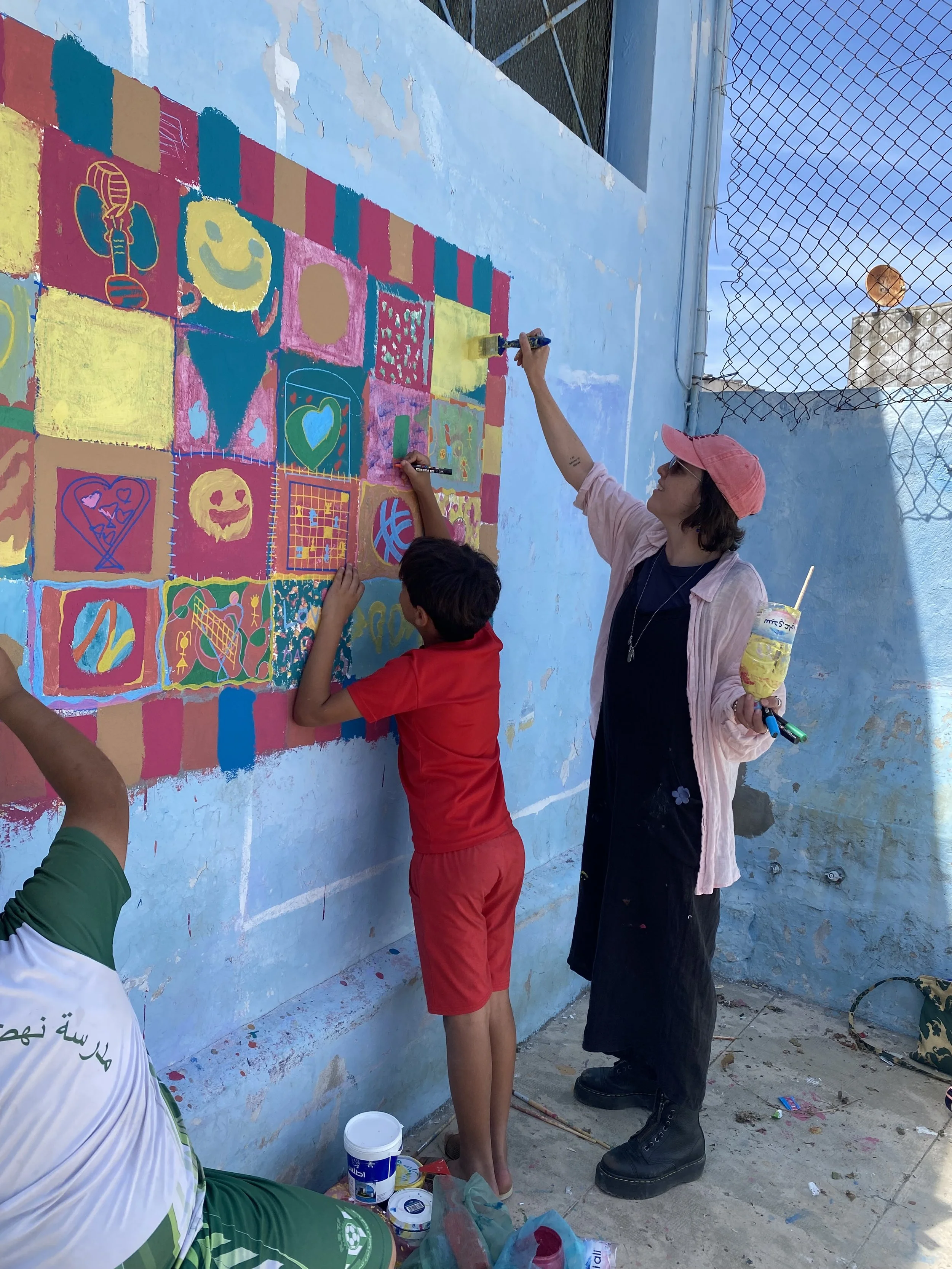
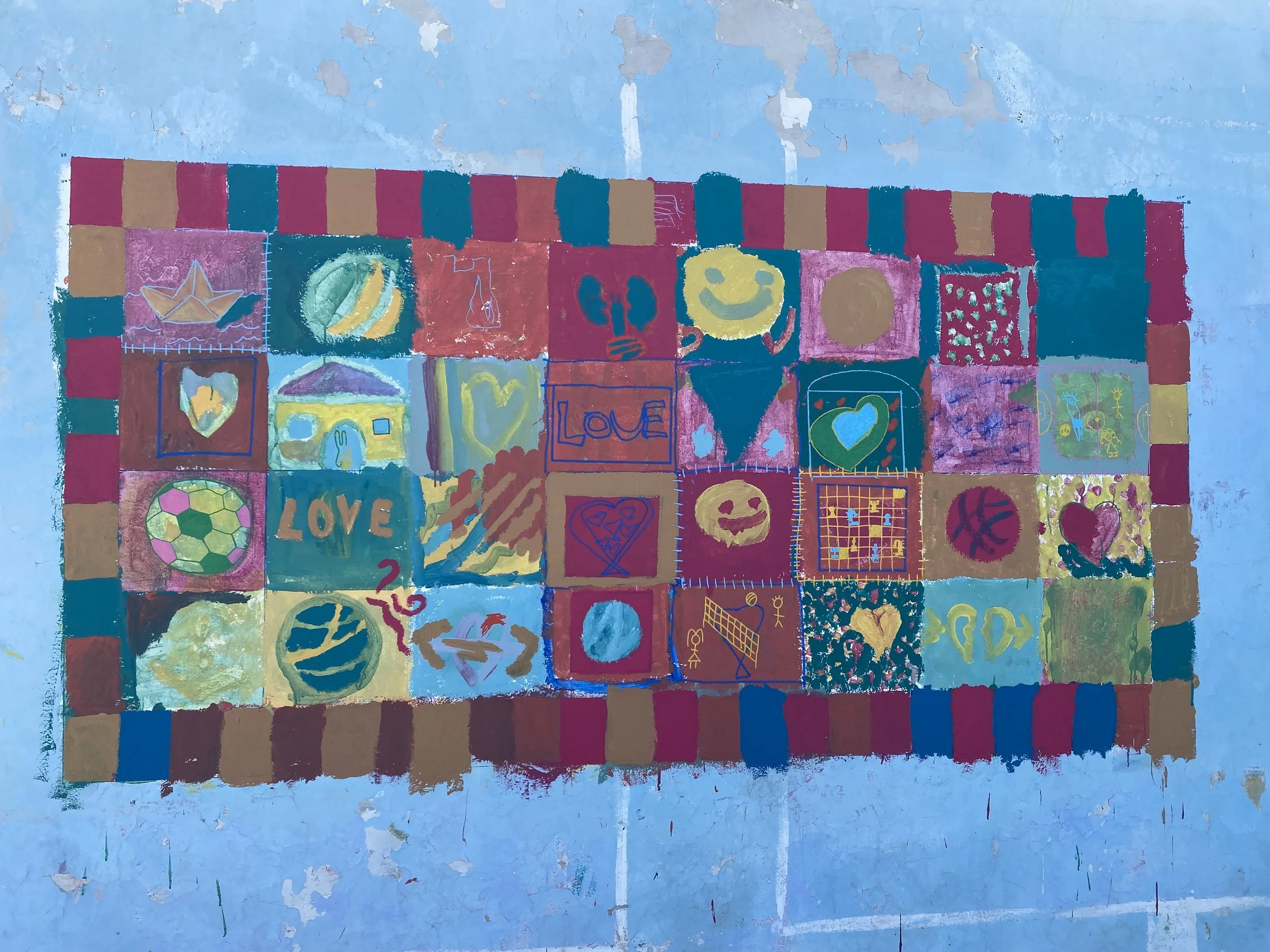
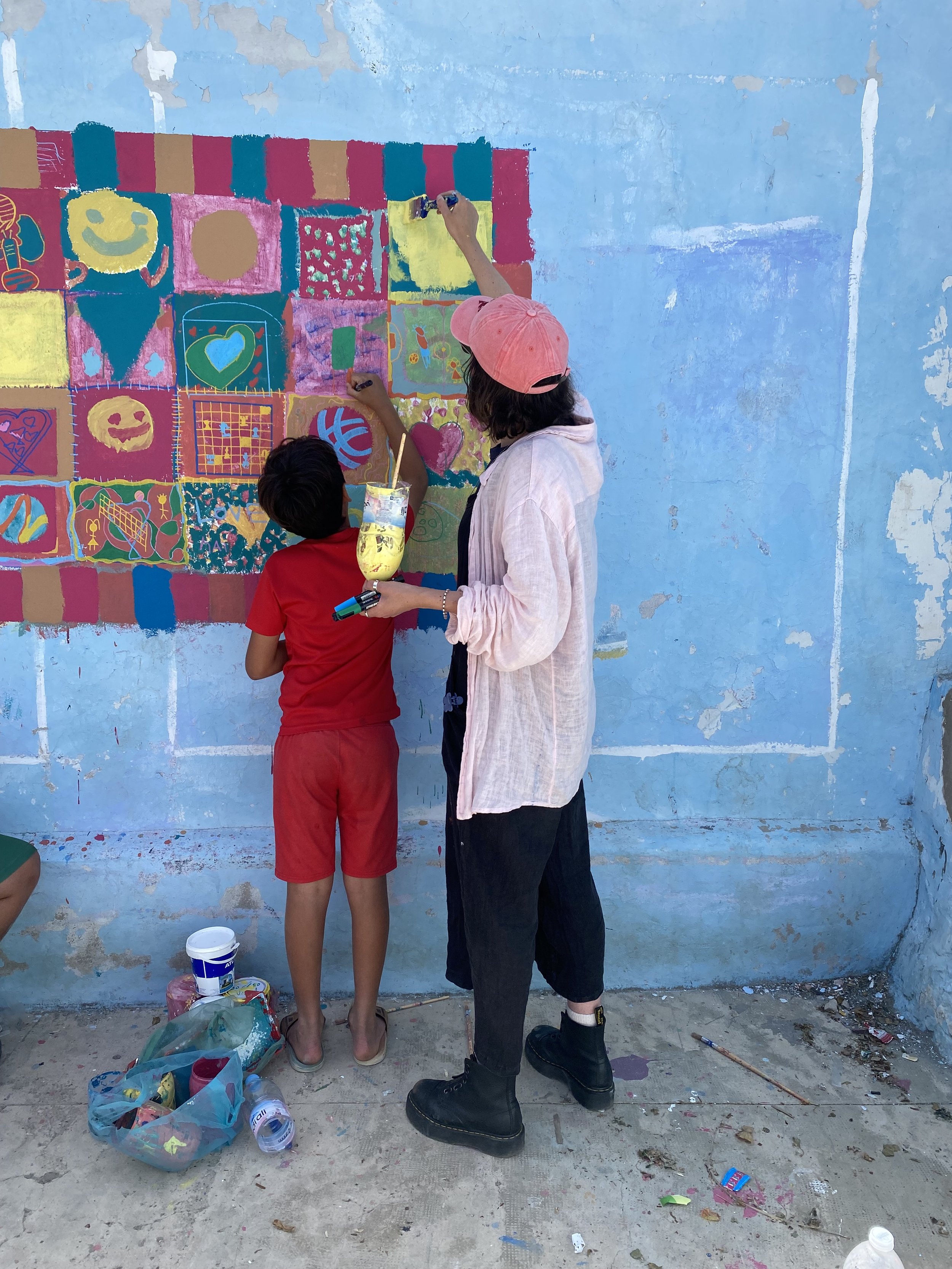
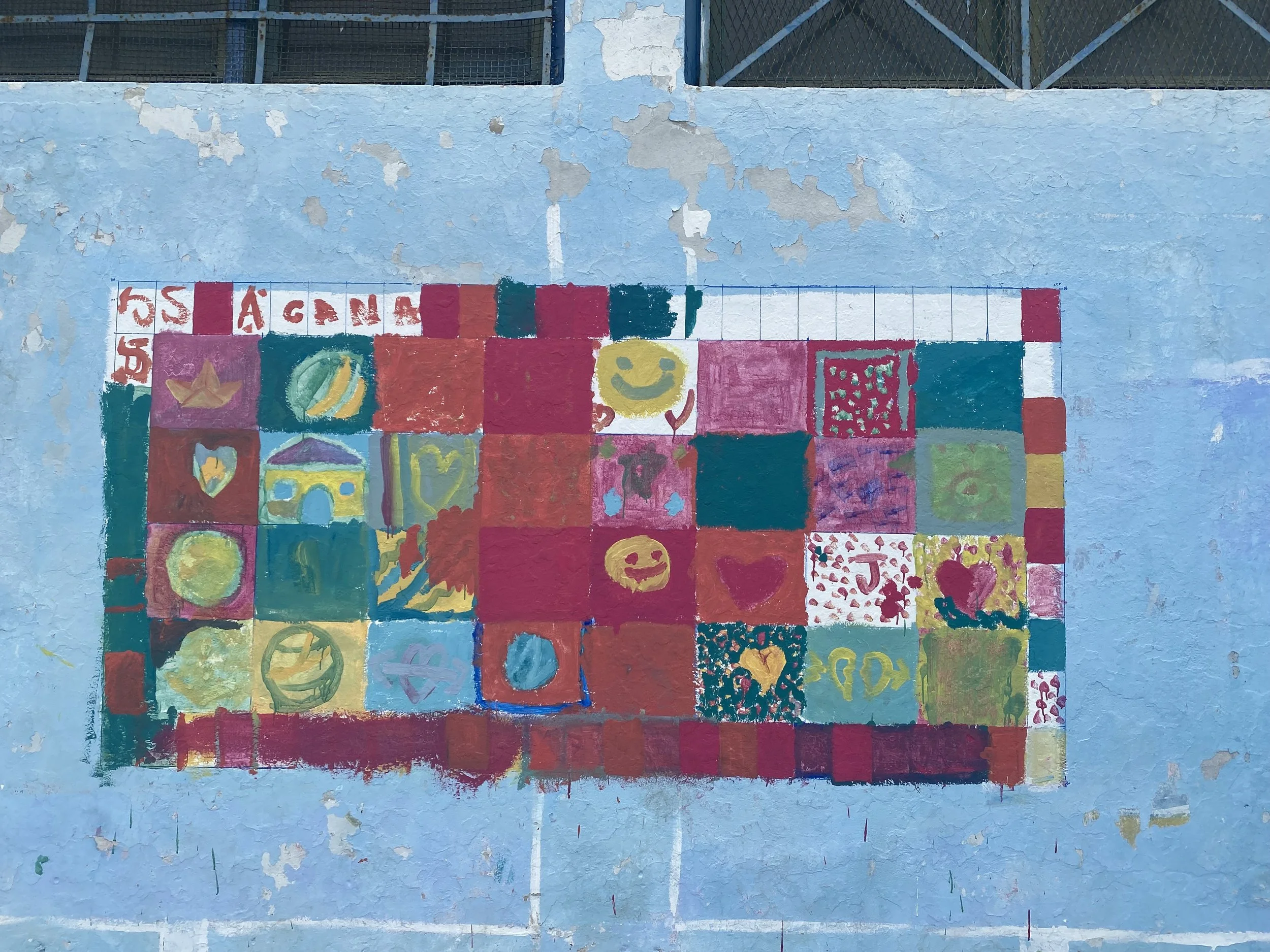
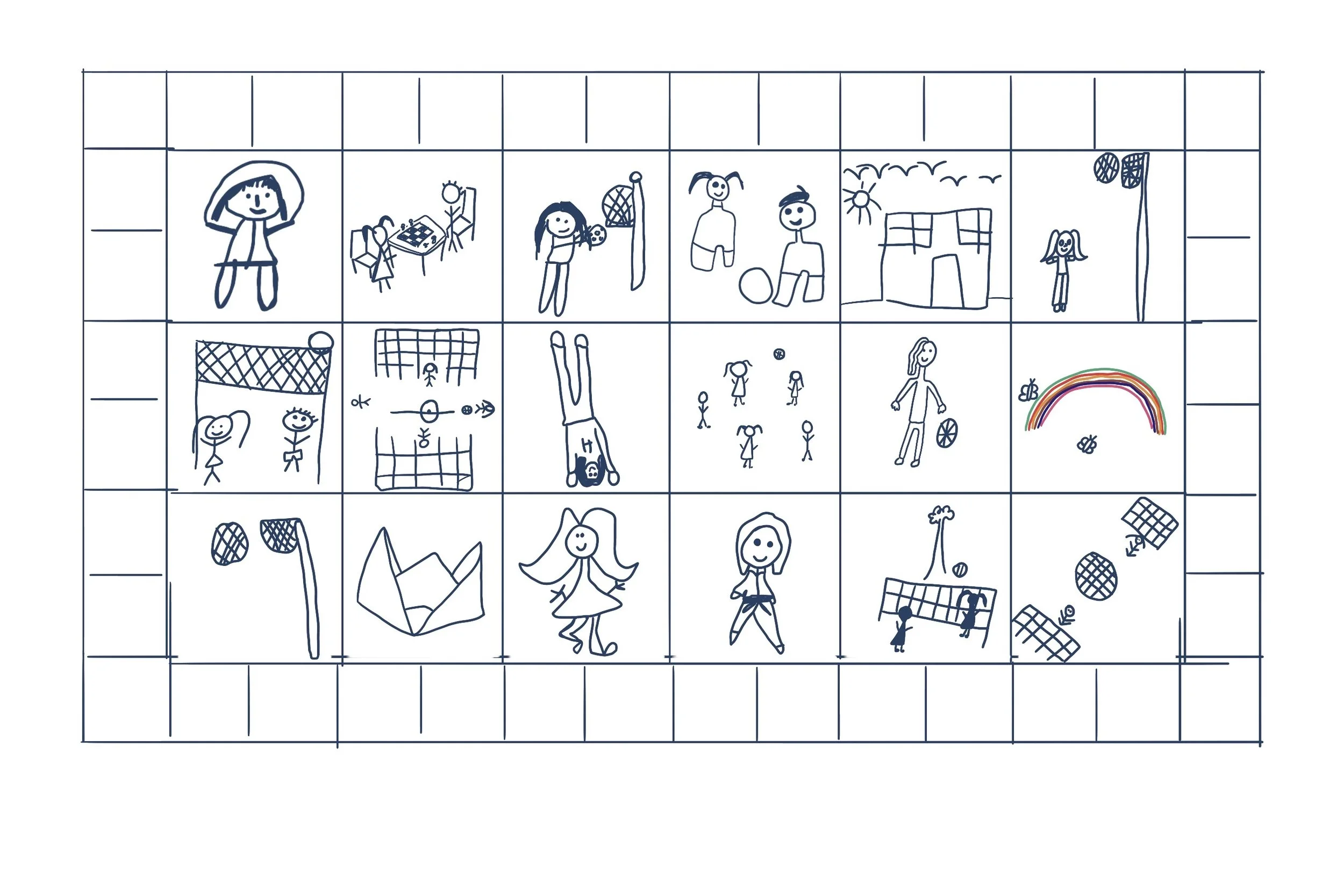
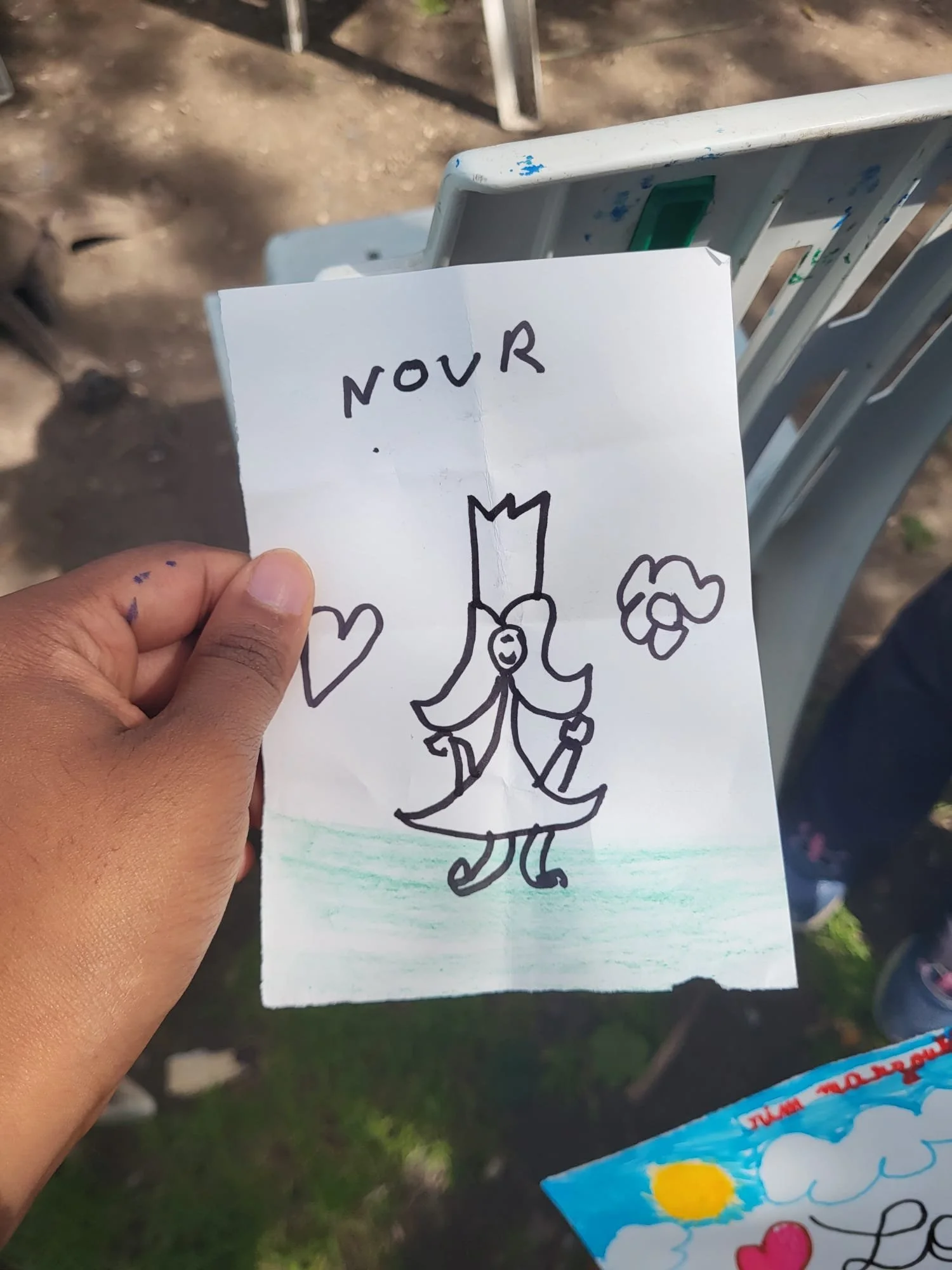
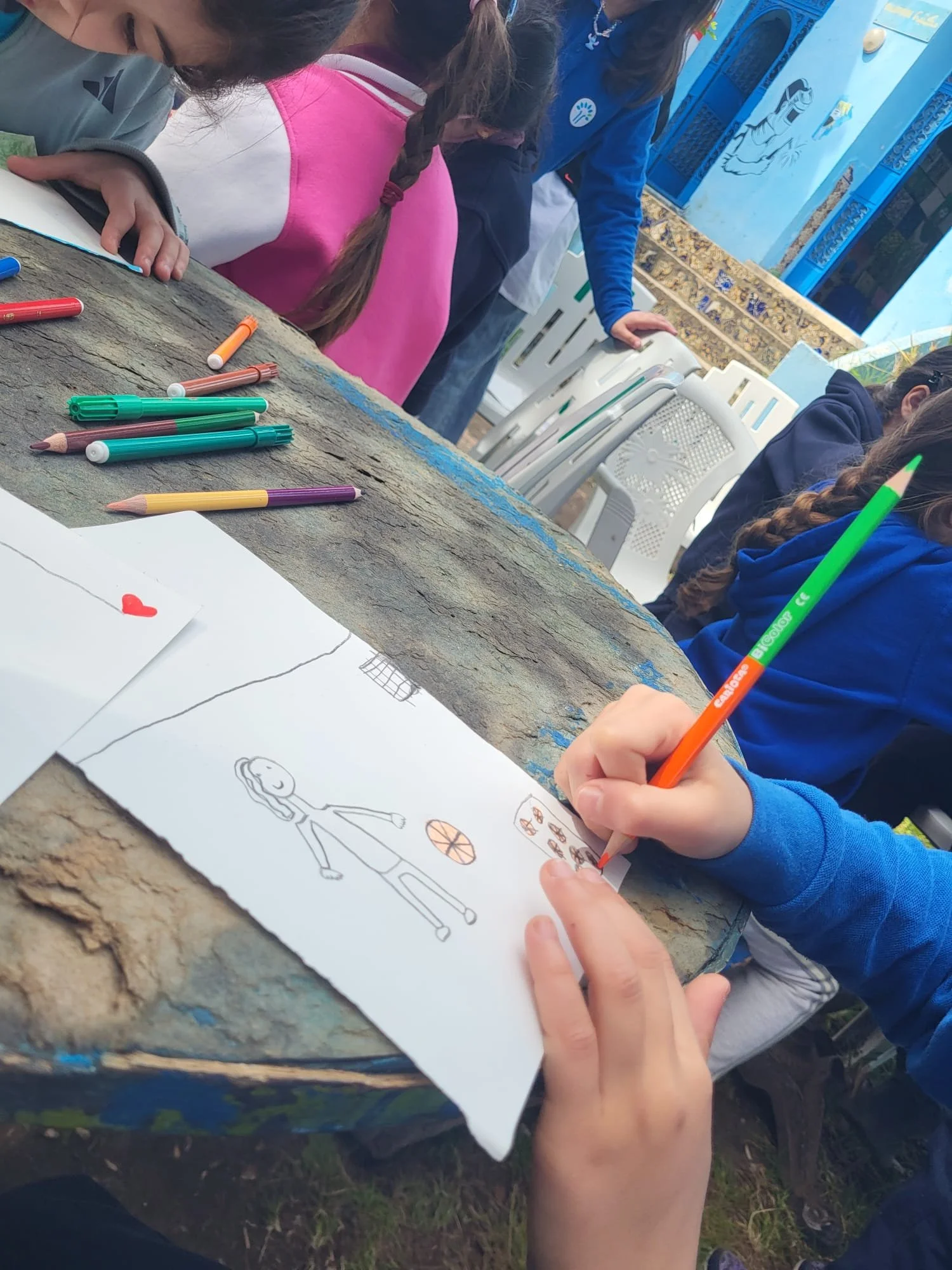
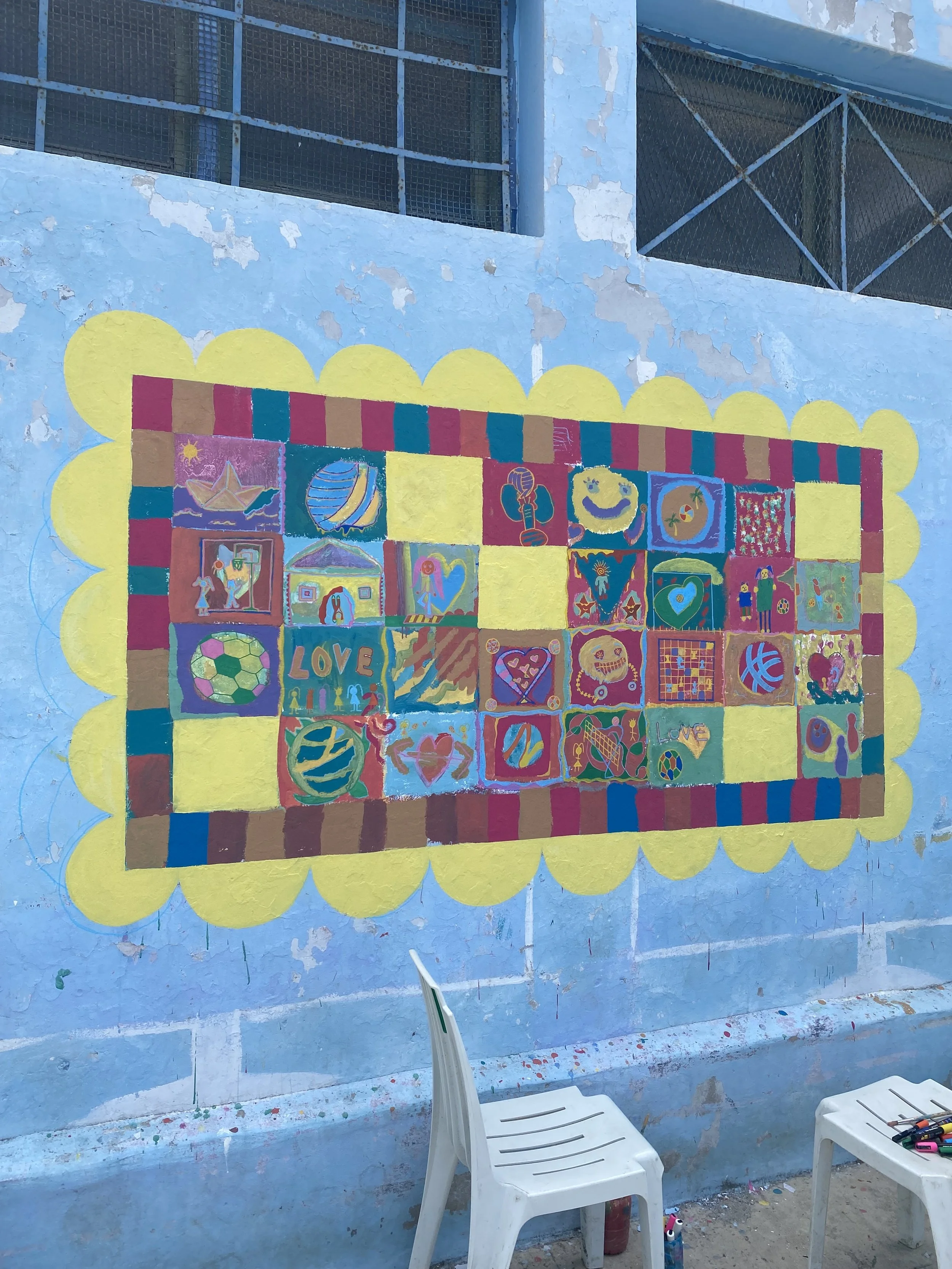
we had to ADJUST our plans as we painted with the kids, allowing them to largely direct the content. as you can see in the video the final product ended up only loosely representing women in sports.
when working in a co-creative manner it is important to balance play and structure. in this mural we made room for play by keeping a more structured COLOR pallet (pink, yellow, blue, white, and teal).
while ‘DOING’ the mural we learned about the girls favorite sports and how much all the kids enjoyed making art and painting.
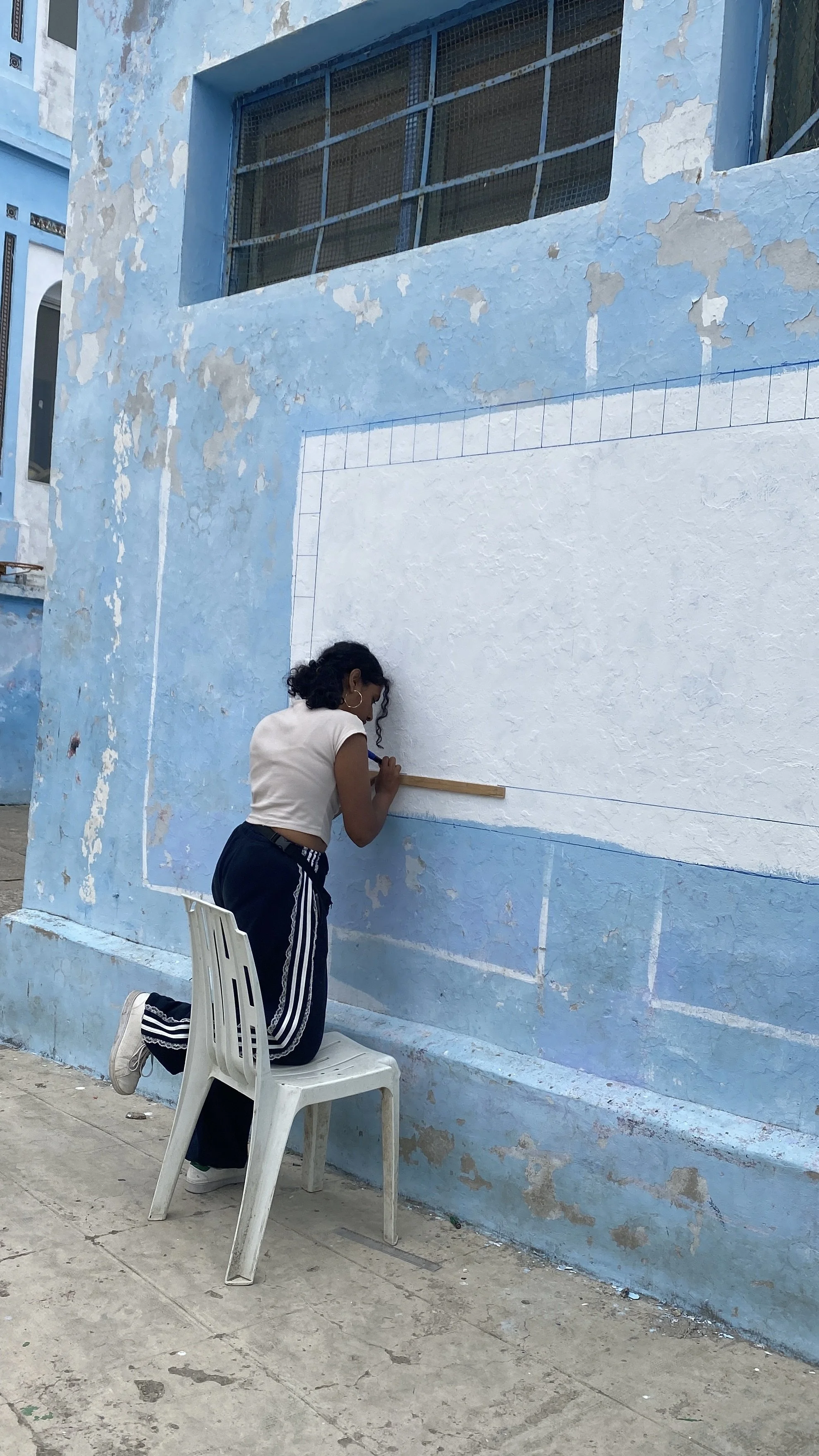
collaborating on this project with fellow artist-educators allowed us to protect our ENERGY by supporting one another and playing to our respective strengths.
we included blank squares to allow the mural to continue GROWING, because our work prioritizes the process over an end result.
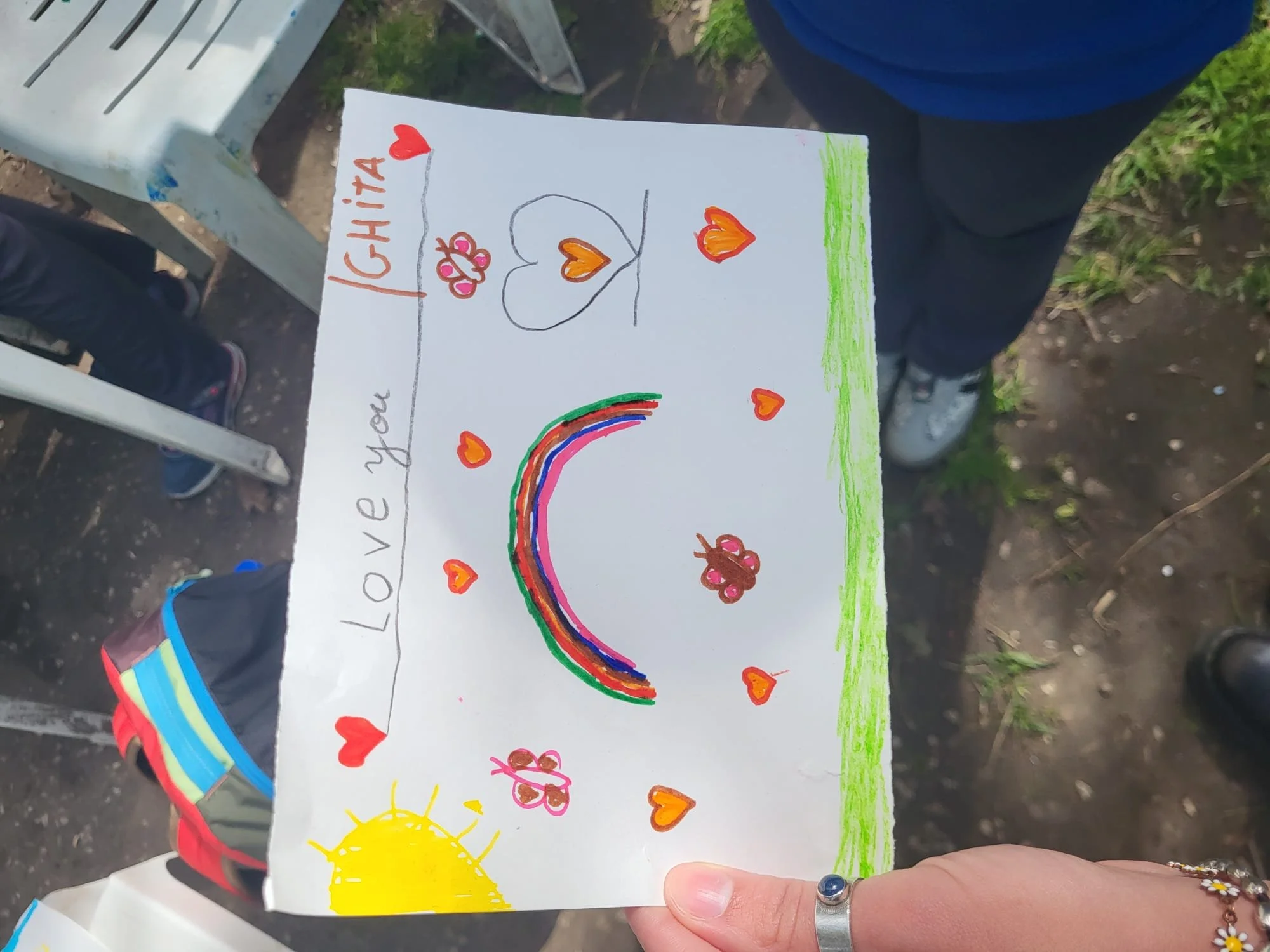
the kids drawing hearts, inviting their friends to join the painting, and their enjoyment making art gave me so much HOPE.
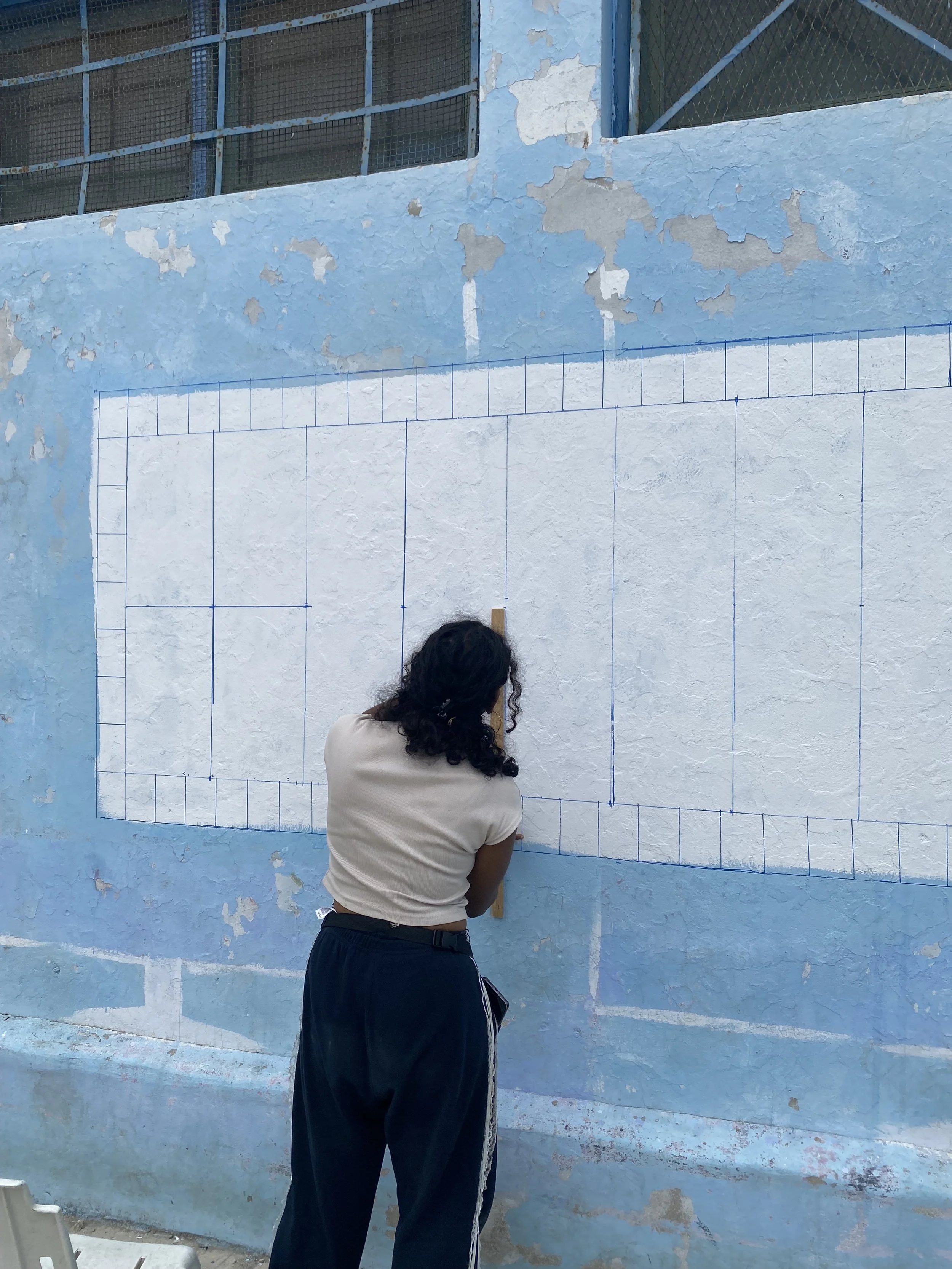
while priming the wall we uncovered layers of older paint, getting glimpses of other murals and discovering that the mural is part of a RHIZOMATIC system.
the colors, kids, playing, and working with other artist-educators made this a JOYFUL process full of laughter.
there was negotiation between us and the kids to figure out WHAT STICKS in the mural, allowing them to take ownership as much as possible.
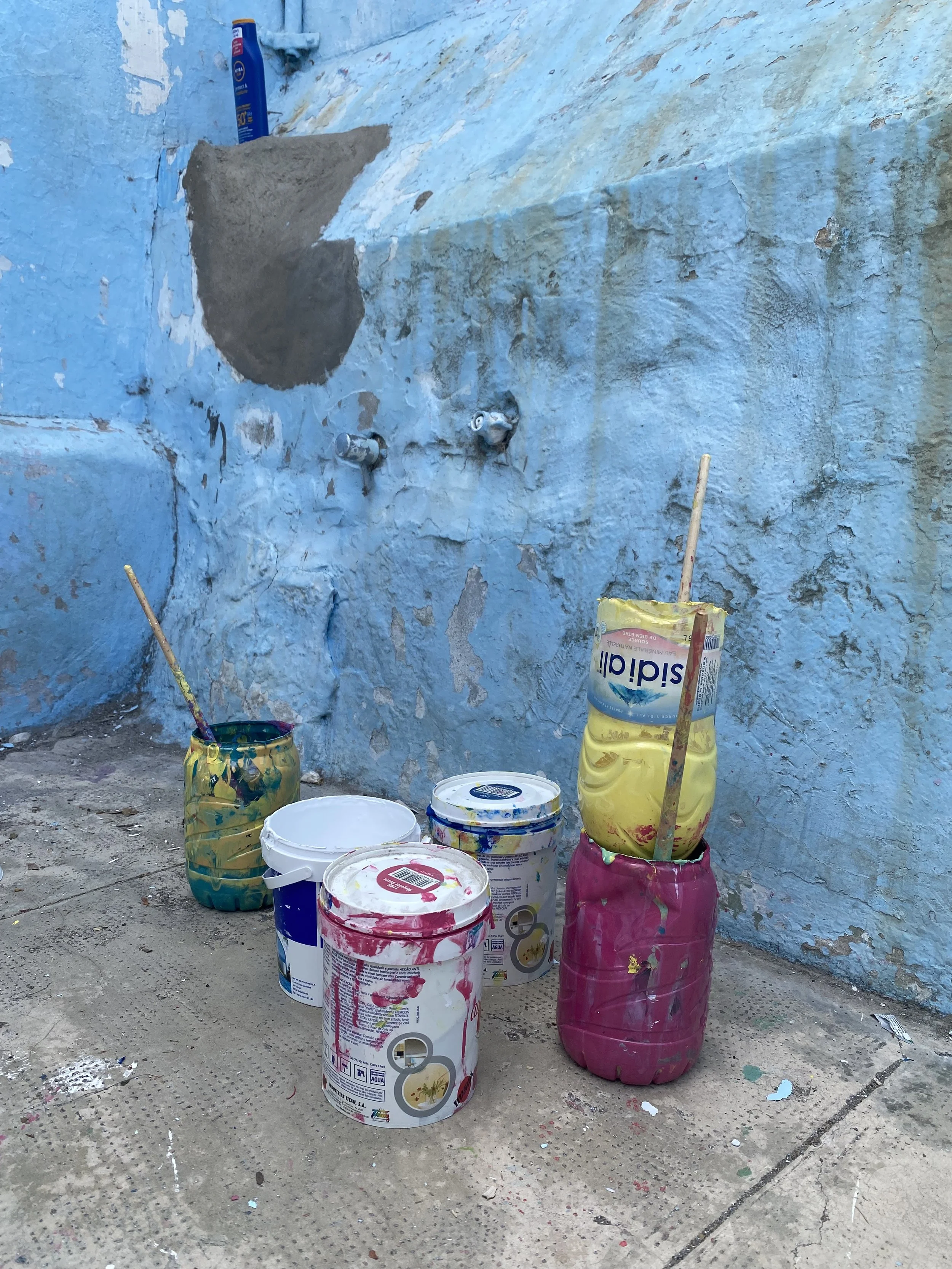
we made sure the MATERIALS (paint & brushes) were high quality, respecting the space enough to make the art last.
some of my favorite MOMENTS were when the kids played sports around us as we painted. once the ball even hit the wet paint on the wall!
the mural was a great tool to create CONNECTIONS between the sports and the arts. kids would run between playing volleyball and painting.
while we worked on making the mural we were able to OBSERVE the kids and the sports from an new perspective, seeing how they moved through the space.
we were able to PLAY so much with the kids during the process through both the sports and the painting.
the mural is meant to challenge the assumptions around gendered activities, QUEERING the way people look at sports.
as the kids painted, the subject of the mural shifted away from sports, however, we RE-CYCLED back by the end with a new understanding.
the STORY we began to tell turned out to not be as necessary as we had originally presumed, most of the girls played sports just not at the house with the boys.
the mural involved layers of TRYING - trying to figure out how to work together, where to get the paint, how to make the mural in this setting, etc.
building up TRUST was a necessary element to make the kids feel comfortable enough to create with us.
the mural was HYPER VISIBLE for the kids because we painted it on a wall in the court where they play sports.
by allowing the space for adjustments to be made we were able to MAKE WITH the kids, not for them.
after asking ourselves HOW TO EXIT, we realized the mural should not end with us. we left supplies and a clear invitation for the painting to continue, acknowledging our role as temporary guests.
CONSISTENTLY showing up to paint and play with the kids became an integral part of the mural and our time in The Darna Children’s House.
now when people look at the court in the house their GAZE is drawn to the colorful mural.